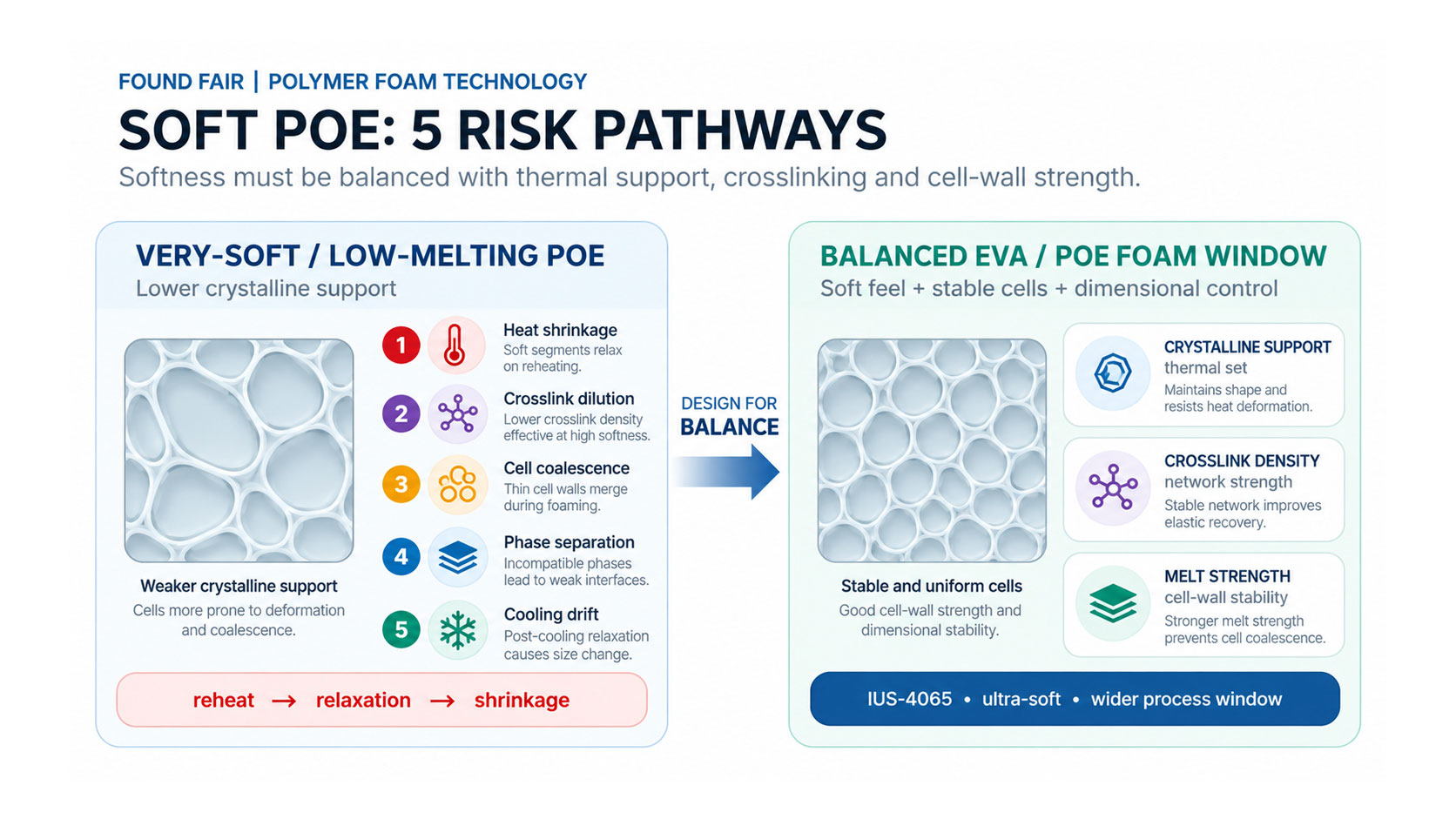
 POLYMER FOAM TECHNOLOGY / SOFT POE RISKS
Ultra-soft, low-melting POE can improve EVA foam softness and resilience, but may increase shrinkage, crosslink dilution, cell coalescence and dimensional instability. Learn the five key formulation risks.
Read Article ↗
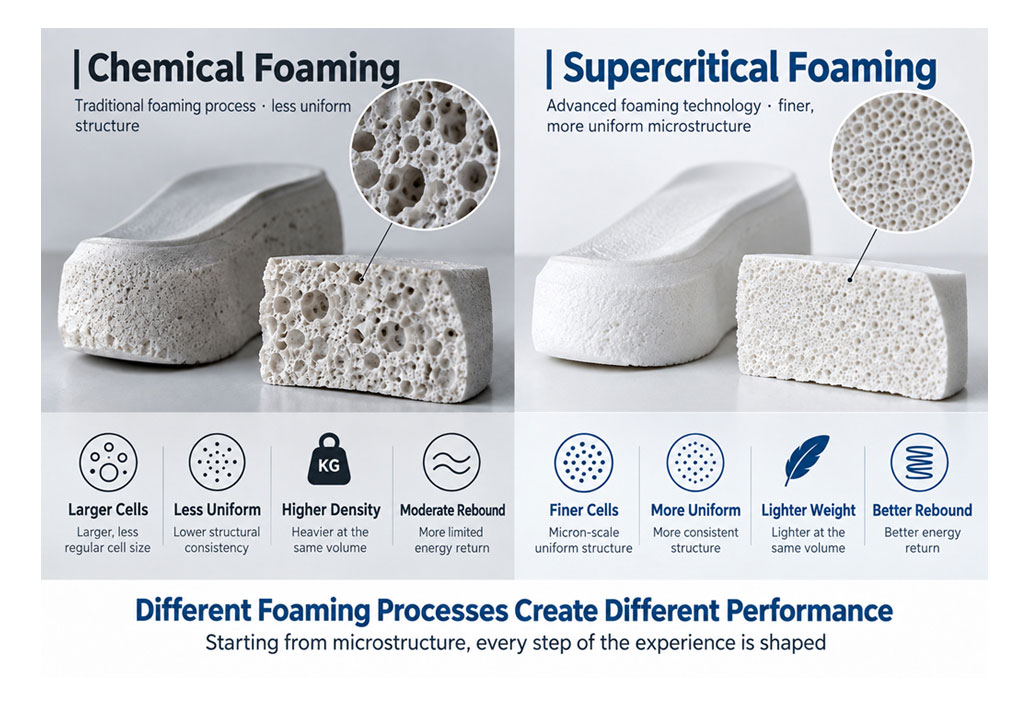 FOAMING TECHNOLOGY / PROCESS SELECTION
Applicable to EVA, POE, TPU, TPE, PP, PE, and engineered foam development
Read Article ↗
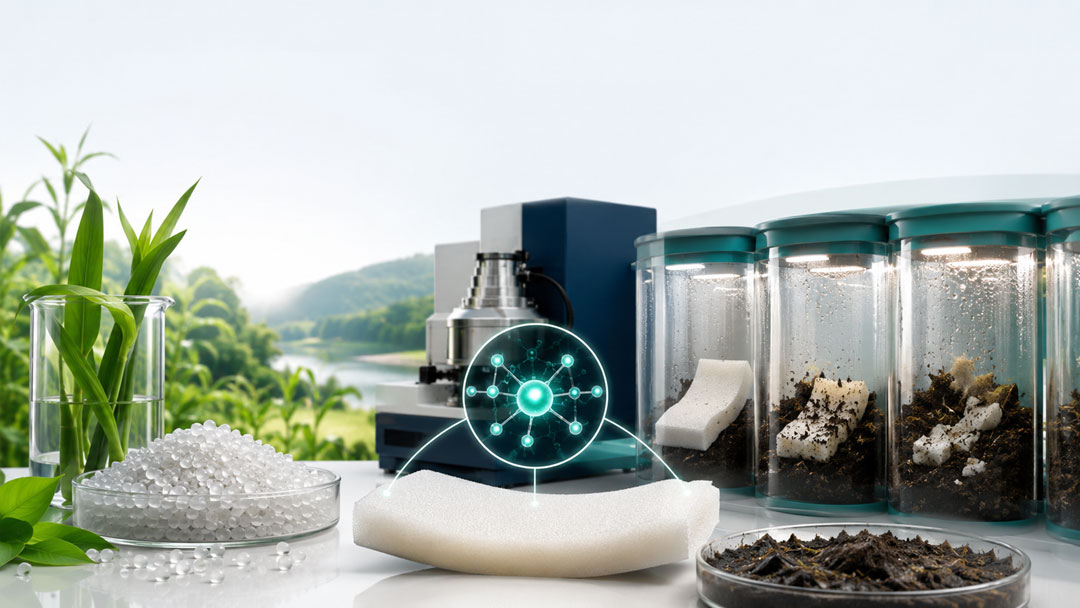 BIOBASED MATERIALS / TESTING & CLAIMS
A Materials Guide to ASTM D6866, ISO 16620, and GTE-8075
Read Article ↗
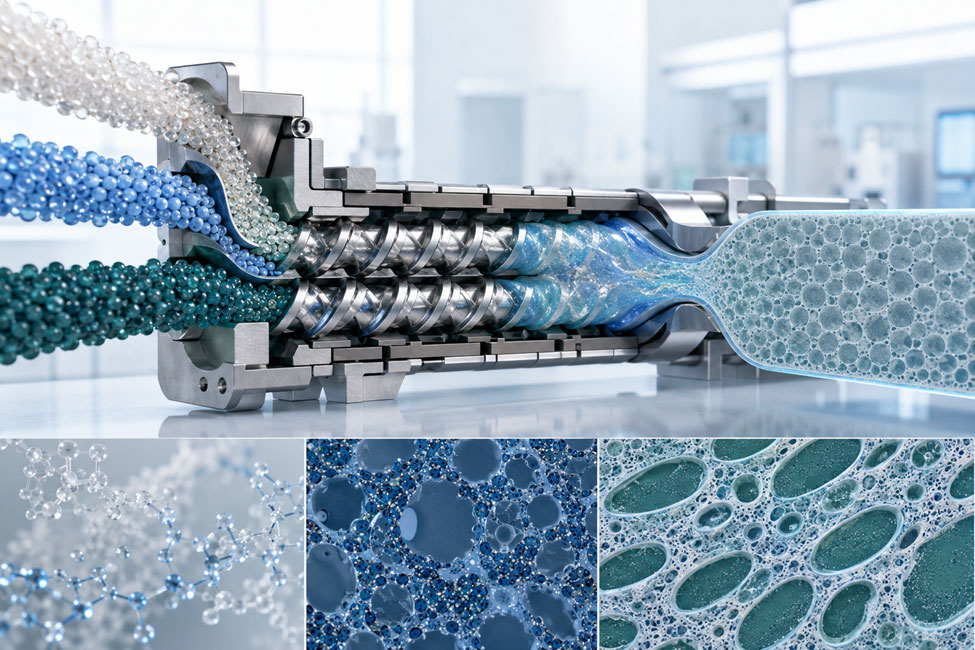 POLYMER COMPOUNDING / SEBS DISPERSION
A technical guide to EVA/POE/SEBS foam formulations, explaining how POE reduces hardness and improves rebound, how SEBS reinforces interfaces and cell walls, and how twin-screw dispersion affects cell uniformity, tear resistance, and dimensional stability.
Read Article ↗
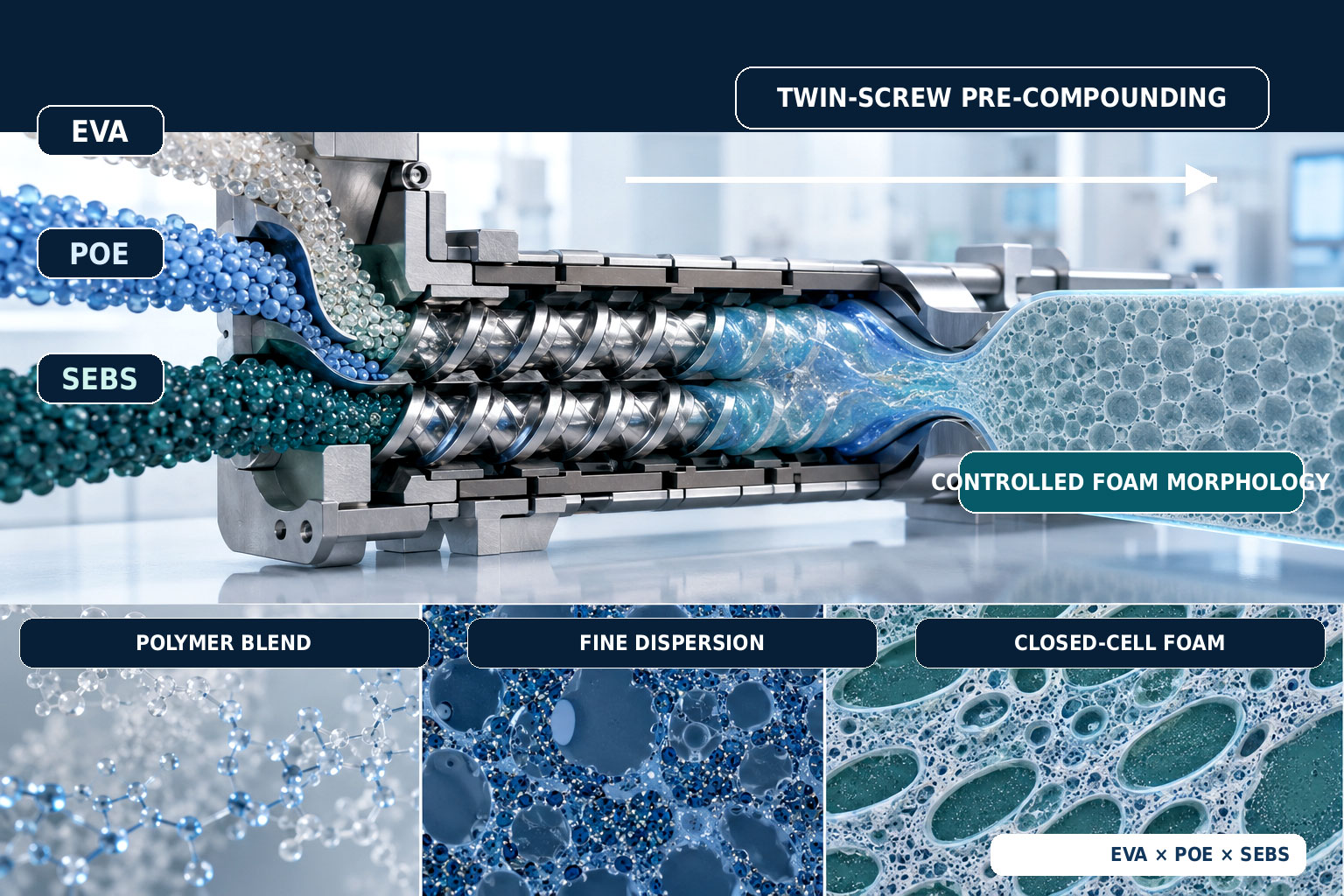 POLYMER COMPOUNDING / EVA POE SEBS
Explore how POE modifies EVA hardness, rebound and low-temperature flexibility, and how SEBS improves melt elasticity, tear resistance and foam cell stability. This technical guide covers EVA/POE/SEBS morphology, twin-screw pre-compounding, SEBS dispersion, DCP crosslinking, foam structure control, shrinkage and formulation optimization.
Read Article ↗
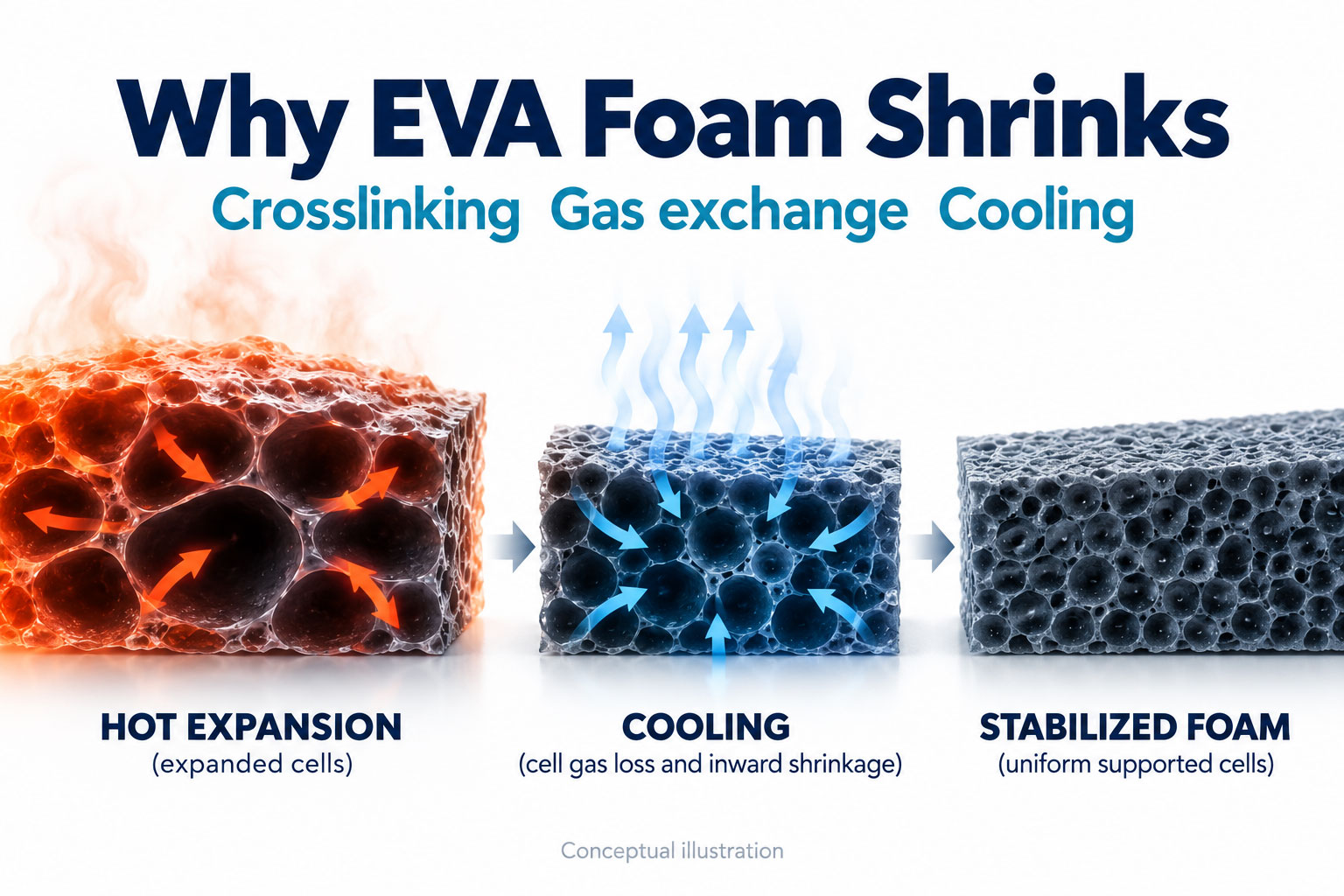 DIMENSIONAL STABILITY / FOAM ENGINEERING
How IUS-4065 may improve secondary shrinkage and dimensional stability in ultra-soft formulations
Read Article ↗
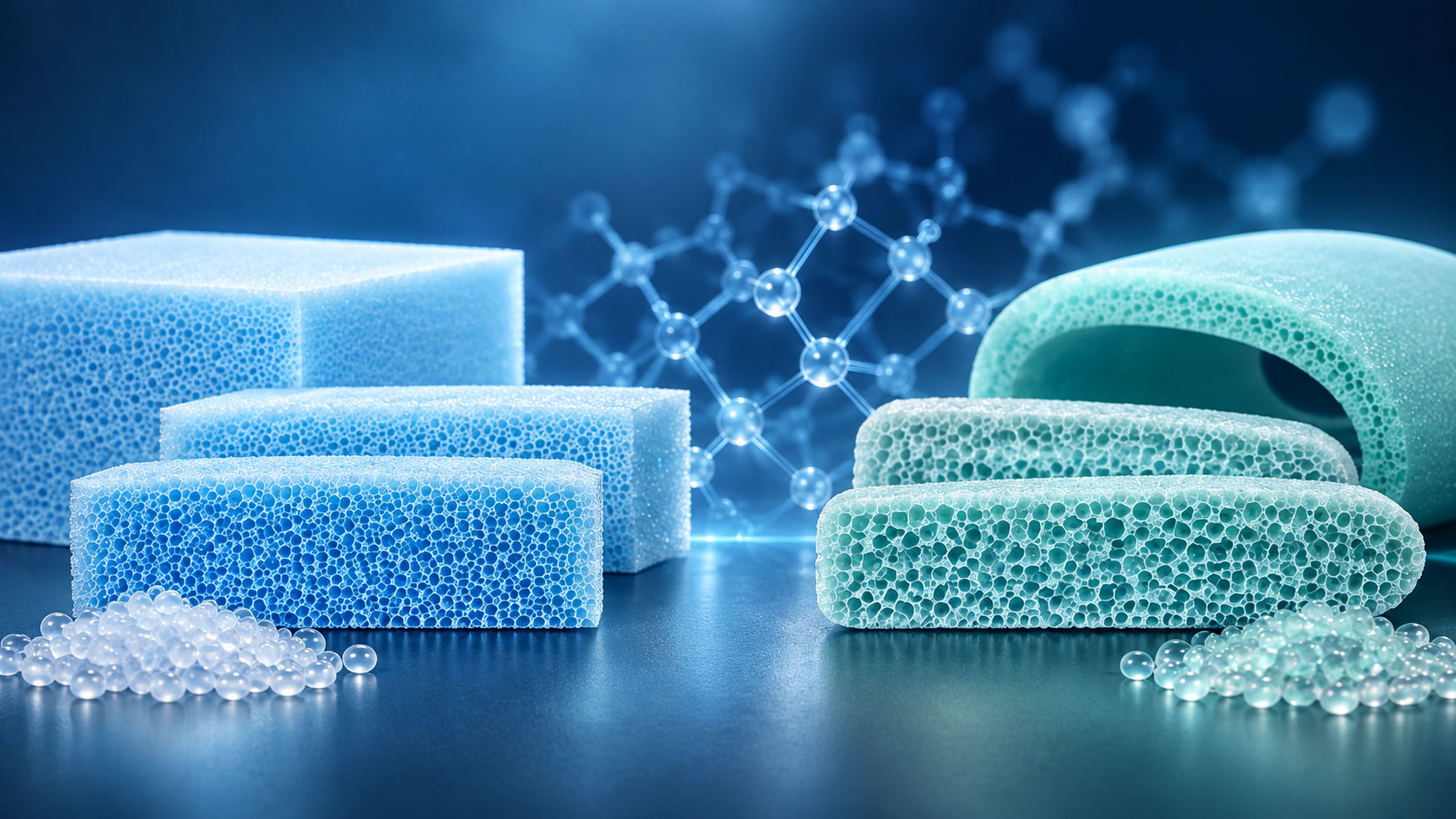 CROSSLINKED FOAM / MATERIAL SELECTION
Technical Guide | For Footwear Materials, Insoles, Sports Protective Gear, and Cushioning Foam Products
Read Article ↗
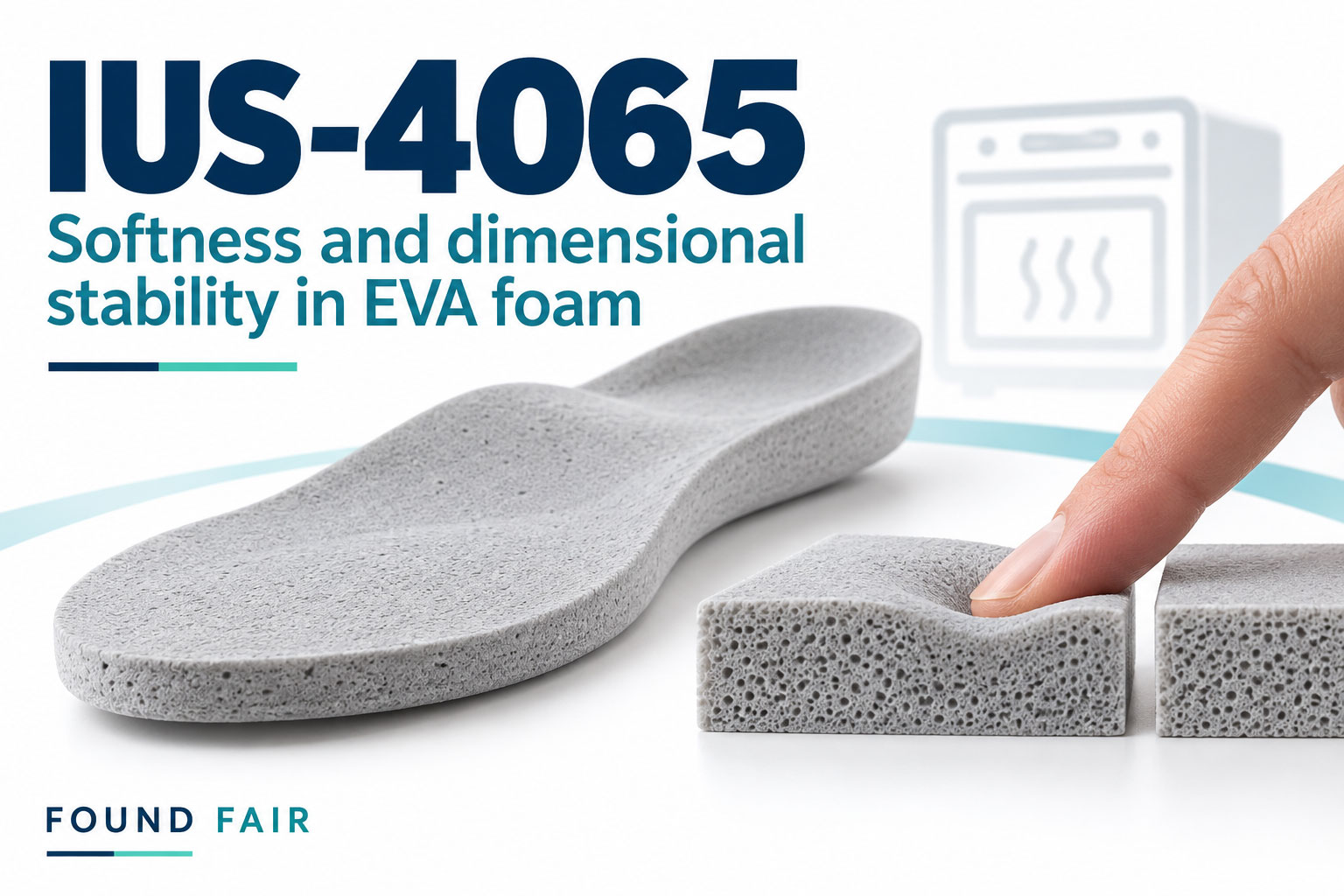 DIMENSIONAL STABILITY / IUS-4065
IUS-4065 for EVA foam applications requiring softness and control of dimensions during reheating. Conceptual illustration.
Read Article ↗
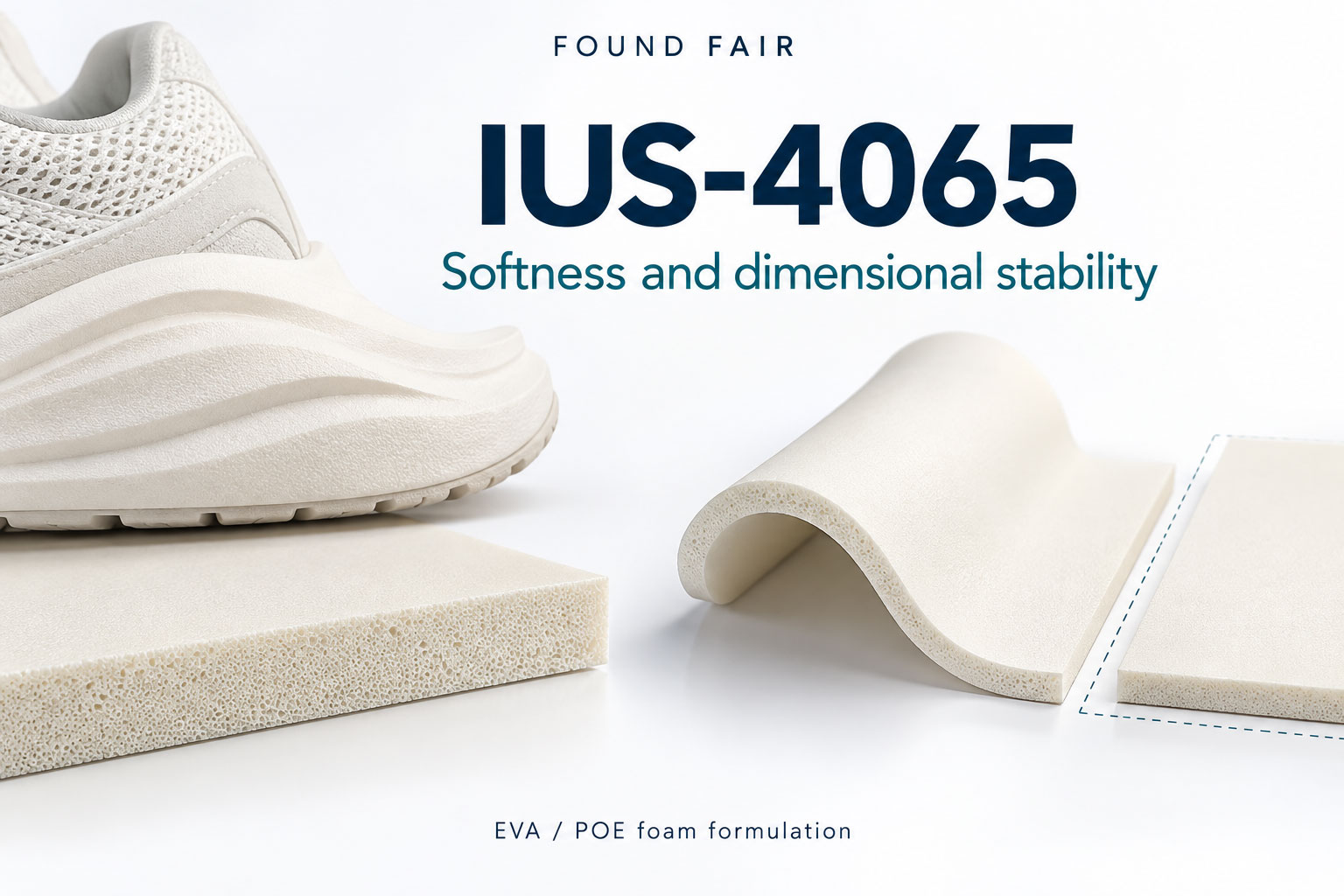 MATERIAL COMPARISON / IUS-4065
IUS-4065 for EVA / POE foam formulation. Product forms are illustrative.
Read Article ↗
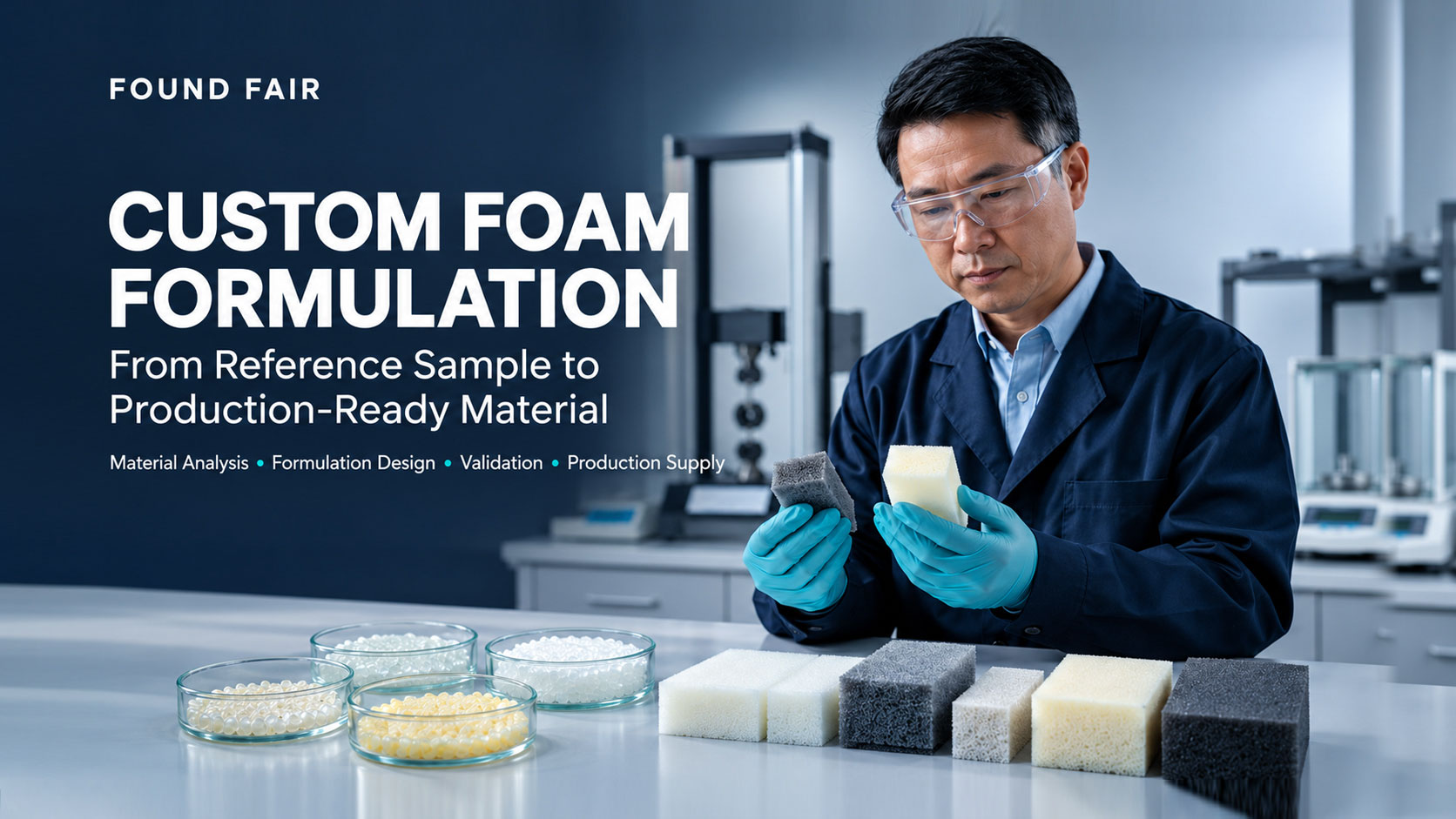 FOUND FAIR · TECHNICAL BUSINESS MODEL
Customers provide a specification or physical reference sample. FOUND FAIR handles material diagnosis, formulation design, testing and validation, mold trials, and long-term material supply.
Read Article ↗